
Handmade Moroccan Tiles: Zellige 101
If you've been paying attention to design trends or visited a stylish hotel lobby in the past year, you’ve probably seen the resurgence of zellige tiles. These handcrafted Moroccan tiles have made a major comeback - and for good reason! With their beautifully imperfect surfaces and rich history, these handmade tiles are stunning and timeless.
A journey through history, the word zellige means “little polished stone” in Arabic. Dating back to the 10th century, these tiles have been a staple of Moroccan architecture for centuries. Hand chiseled and set into a plaster base, each forms an intricate geometric pattern. Originally reserved for the grandest Moroccan structures, it’s just now making its way into modern homes around the world.
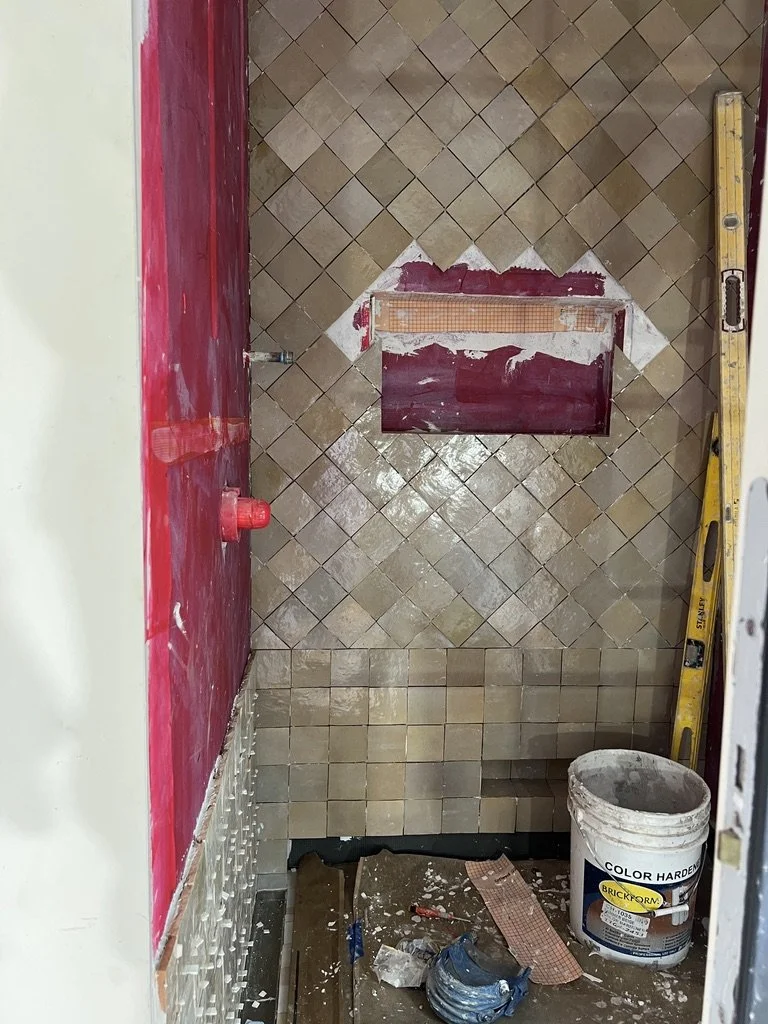
In the US we often see these tiles in serene white colors used in bathroom showers or as a kitchen backsplash. In a kitchen, it can be wrapped around a curved surface. These tiles also look stunning in bold colors and intricate patterns and add a burst of personality to any space.
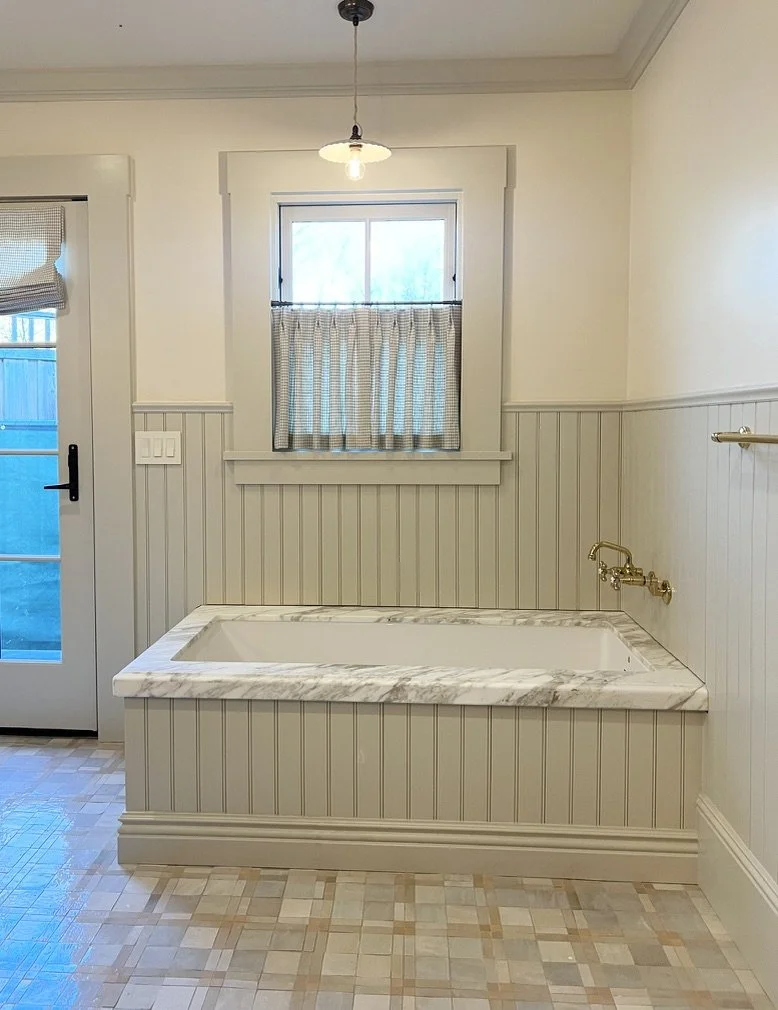
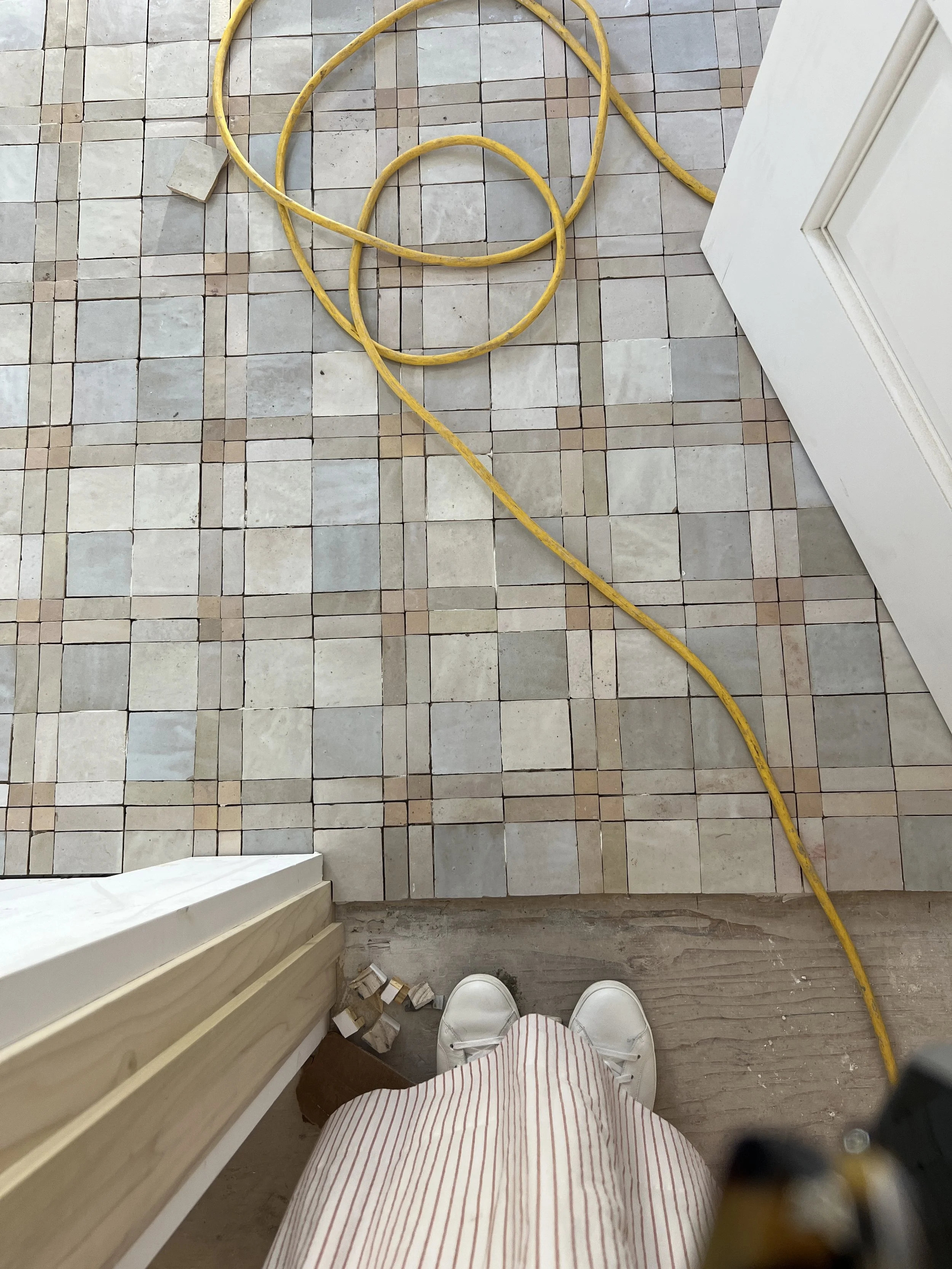
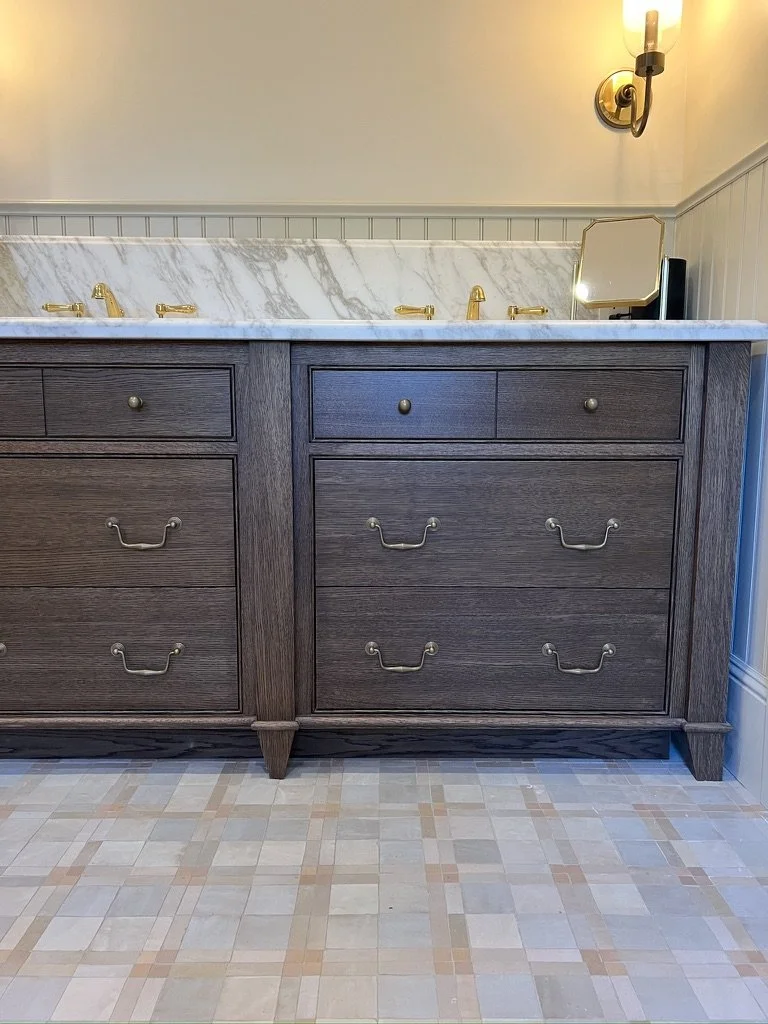
At Fletcher Rhodes, we’re currently working on a big project called our Schoolhouse Project. In this 1900’s renovation, we embraced zellige tiles in a neutral palette and plaid pattern. It brought a touch of rock n’ roll and elegance that felt perfect for a historic American building! To see what I mean, checkout this post on Instagram that went viral!!
When it comes to installing zellige, it can be challenging. You definitely need an installer that has experience with handmade tiles. From positioning each tile to selecting the right grout color, this is where it pays to hire the pros!